

Termination technologies should be compared according to equipment interface, cable construction and installation requirements rather than by product category alone.
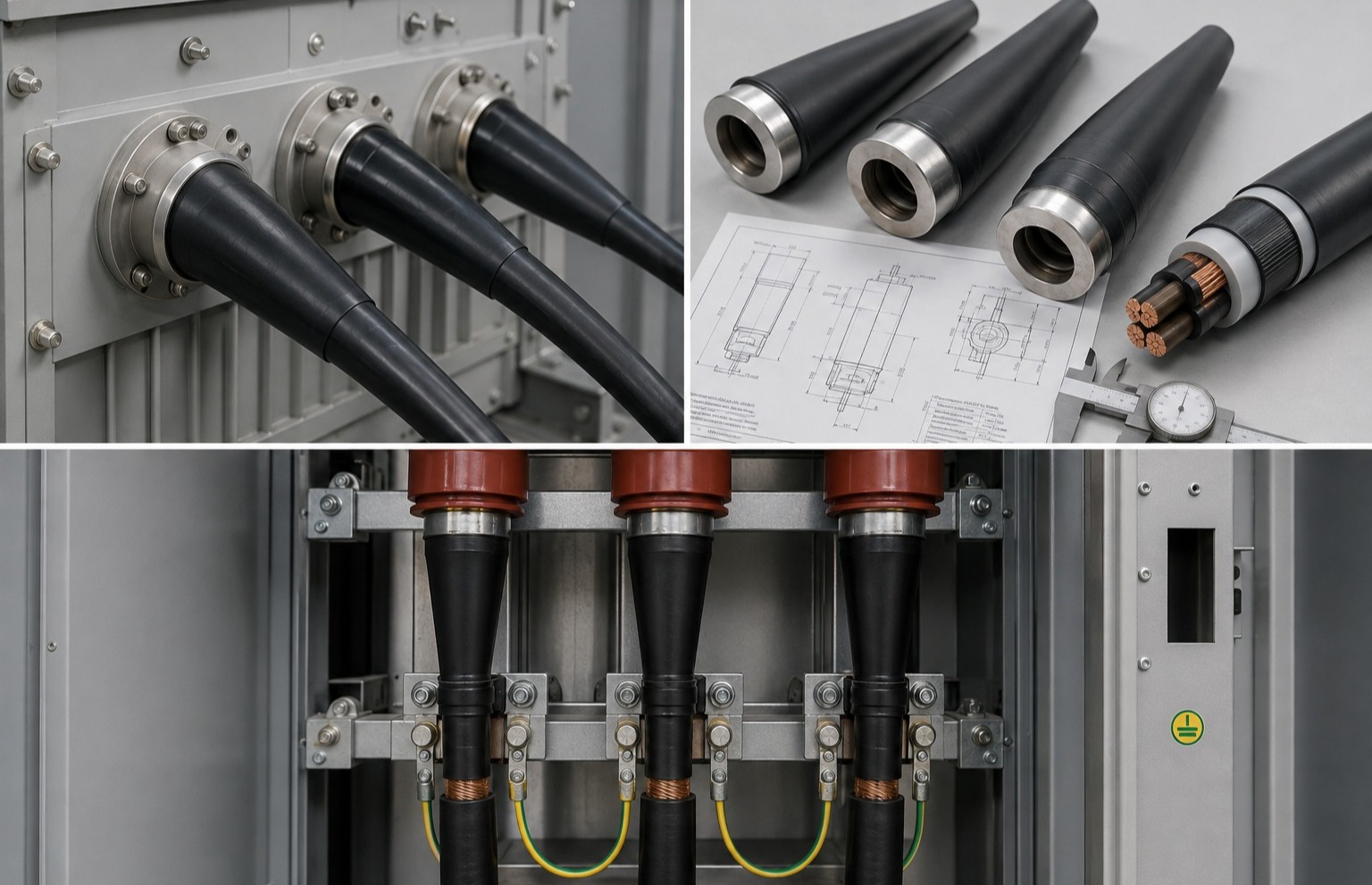
Outer Cone Terminations use a defined external conical interface, making equipment compatibility one of the first selection criteria. The termination must correspond with the geometry of the equipment for which it is intended.
Cable characteristics then become the next consideration. Insulation diameter, conductor size, cable construction and voltage class should be verified against technical documentation before procurement.
The comparison with other interface arrangements is primarily about physical connection design. Two termination systems may serve similar electrical applications while using different equipment interfaces, meaning they cannot necessarily be substituted without technical verification.
Installation planning should also be included in the evaluation. Cable preparation requires controlled dimensions and adequate access. If these factors are overlooked, site teams may face unnecessary installation difficulties even when the selected component is otherwise suitable.
For procurement, the most reliable sequence is to establish the equipment interface, confirm cable parameters and then compare technically compatible options. This prevents commercial considerations from dominating before technical suitability has been established.
The same documentation can support future maintenance by giving engineers a clear record of the installed cable and equipment interface.
For medium-voltage connection requirements in Pune, engineering teams can assess equipment geometry, cable specifications and installation conditions with Pristine Engineering Services PvtLtd before selecting the appropriate termination.